
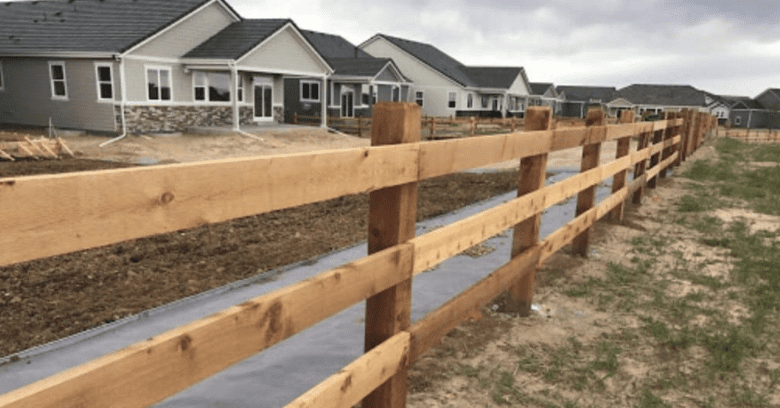
Shopping Around for Farm Fencing Company around Bryan?
College Station Fencing shows its work before it asks for yours across Bryan farms and ranches.
Call 979-553-6447 with the list of things you want to know.
Sorting Out Who Is Responsible for Which Step
A fence provider is more than a person with a post-hole digger: measuring the line, ordering materials, setting posts, attaching panels, and hanging gates, and when one step is skipped, the fence usually shows it within a season or two. Jot down the details while they are fresh, so that the comparison later rests on facts and not on impressions. Find out who removes the old fence and the leftover scraps, and a clean site is a sign of a careful provider.
People starting a search end up picking a process as much as a provider. That conversation is short and prevents most surprises, and it sets the tone for the rest of the job. Use one list of questions for the whole search, and the quality of the answers becomes easy to judge.
The Details That Belong on Paper
The paperwork for a fence does not need to be long, only specific: the starting point, the corners, and how the line meets any slope, and a missing detail usually turns into a surprise on installation day. Gaps are as informative as entries, especially anything about the ground and how it will be handled.
Proposals for the same yard can describe very different fences: see whether the proposal describes the fastening, the finish, and the cleanup, because that is where shortcuts tend to live. If a line item is unclear, ask for it in plain words, and nothing about a fence is too small to ask about. See whether the gate frames and hinges are named, since a gate sees more use than any other part of a fence.
Seeing Completed Fences With Your Own Eyes
Nothing teaches more than a fence that has been through a few seasons: walk along the run and watch for leaning posts and gaps at the bottom, and keep in mind that clay soil is hard on every fence. Look closely at the gates too, and the way a gate hangs reveals how the posts were set.
When you are asking about Farm Fencing Company in Bryan, the closest match to your own project tells you the most. Ranch wire and decorative iron are close to separate trades, and a direct question settles it quickly. A drive past a few finished fences is time well spent, and the pattern across several fences is more telling than a single example.
What Local Ground and Weather Ask of a Fence Builder
Local conditions decide a lot about what holds up and what does not: caliche and rock can sit shallow, which changes how the posts are set, and the difference shows up as a straight fence or a leaning one. A good provider explains the reason behind each choice, and general statements without specifics should prompt another question. Find out how surprises underground are handled, and that is usually a sign of real field knowledge.
Ask how the fence is built to handle strong wind without tearing loose: good answers sound like descriptions of work, not slogans, and keep asking until the picture is clear. Rules on height, style, and stain color can matter a great deal, and the owner usually has to be involved in the approval.
Different Fences Call for Different Skills
A pool barrier, a ranch fence, and a privacy fence share little beyond the word fence: ranch and farm fencing depends on stretched wire, braced corners, and gates for animals and equipment, and the right question is simply how often they do that kind of work. Say what the fence has to do, whether it is holding animals, blocking wind, or marking a line, and anything that does not fit the purpose can be dropped. Say what the fence is protecting, and that information alone changes the questions to ask.
Interest in Farm Fencing Company can include new work, repair, staining, or replacement: a short conversation about the real project is the most useful filter. Gather the facts that affect the work, and note where the utilities run and where the survey pins sit.
What Good Communication Looks Like on a Fence Job
Planning a fence means planning around utilities, materials, and weather: the 811 utility locate has to come back before digging begins, and any change to the plan should be confirmed in writing. Allow room in the schedule for weather, and a calm schedule beats a rushed one. Find out who arranges for buried lines to be marked, and it should appear in the schedule.
Pay attention to how responses sound before the job starts: honest talk about weather and utilities is better than a promise that ignores them, and a provider who is hard to reach now will be harder later. Notice whether the provider asks about your goals, and good questions mean the planning is already underway.
What Happens After the Last Post Is Set
New fences settle, and clay soil moves them: rust spots on metal should be touched up before they spread, and it helps to know who to call when that happens. A follow-up walk takes little time and tells you plenty, and contact the provider about anything that looks off.
Storm winds and heavy rain are part of life here: find out whether the provider handles repair work as well as new construction, and knowing that early saves a scramble later. Think through the plan before the weather forces it, by looking at leaning posts and any gaps at the bottom. Ask about the process for a fallen section, since a gap next to a pool or a pasture cannot wait for a slow response.
Starting a Conversation in Bryan
A good provider makes the whole job easier to understand: the scope in writing, the finished work you can see, and the answers that were specific, and that is a fair test for any fence company. The approach carries from one project to the next, and a provider who passes them is worth a second conversation.
If your search for Farm Fencing Company around Bryan has narrowed down, phone 979-553-6447 and describe the project. A sketch on paper is plenty to get started, and the rest can be worked out together. Nothing about the process needs to be rushed, and the right provider will welcome the scrutiny.